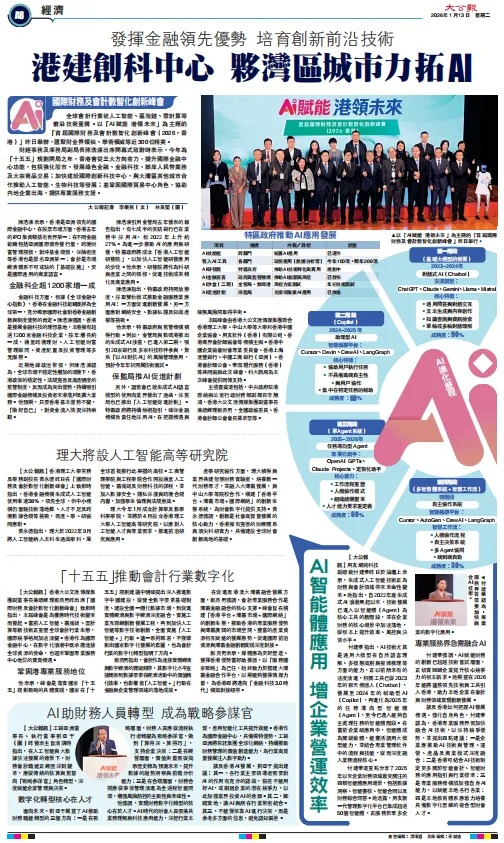
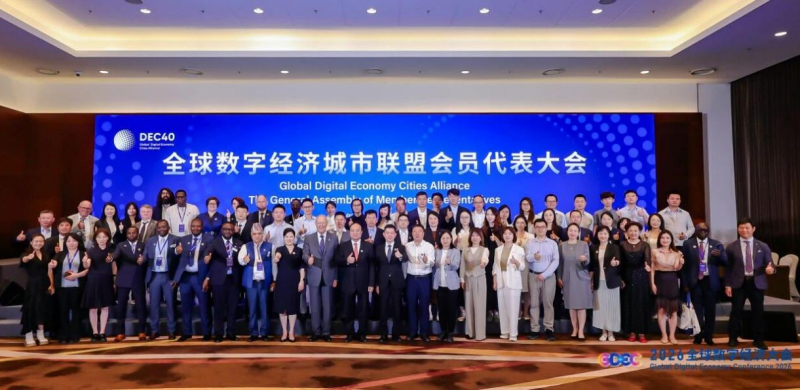
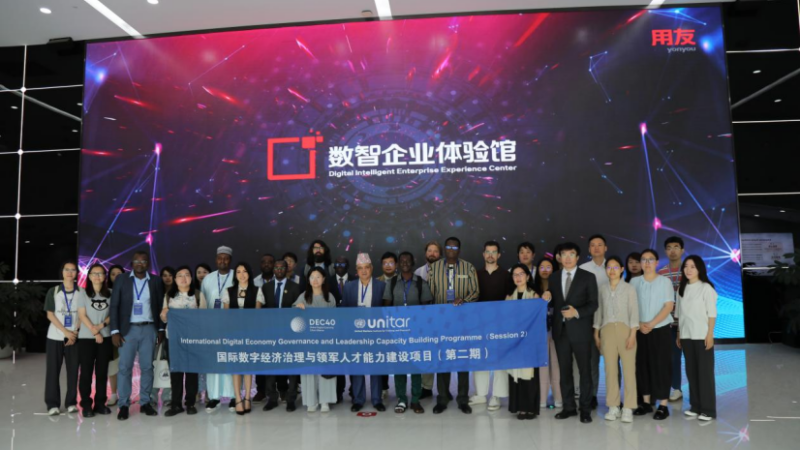
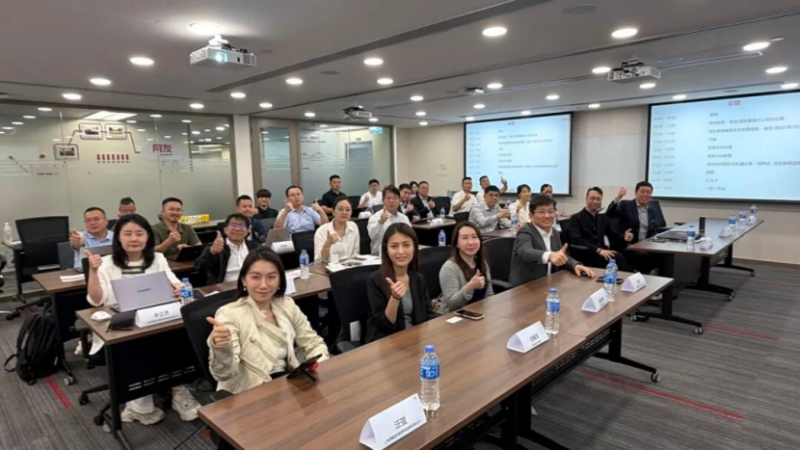
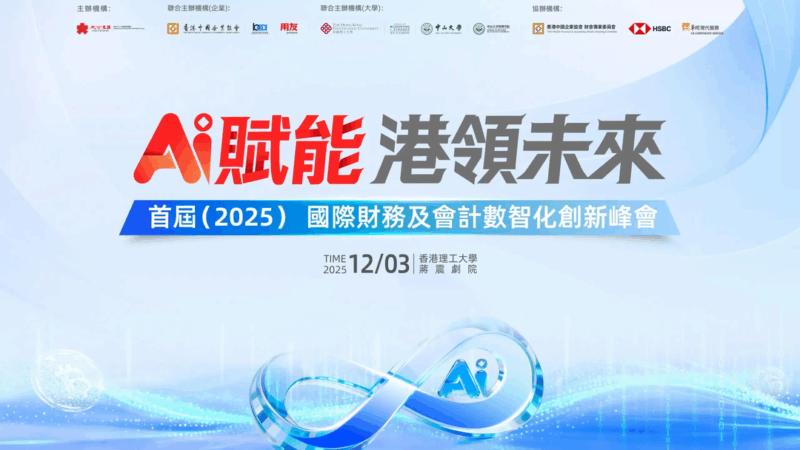
On January 12, 2026, the inaugural “International Innovation Summit on Financial and Accounting Digital Intelligence (2026 · Hong Kong)” was successfully held at the Chiang Chen Theatre of The Hong Kong Polytechnic University. Jointly organized by Hong Kong Ta Kung Wen Wei Media Group, The Hong Kong Chinese Enterprises Association, Hong Kong Business Accountants Association, Yonyou Network Technology Co., Ltd., and Yonyou (Hong Kong) Co., Ltd., with the collaboration of institutions such as The Hong Kong Polytechnic University and Sun Yat-sen University, the summit gathered hundreds of distinguished representatives from government agencies, international accounting firms, top universities, financial enterprises, and leading technology companies. Centered on the theme “AI Empowerment: Hong Kong Leading the Future,” the summit explored how cutting-edge technologies such as artificial intelligence and blockchain are reshaping the global finance and accounting industry, while driving the intelligent advancement and international integration of professional services in the Guangdong-Hong Kong-Macao Greater Bay Area.
Capitalize on Financial Edge,Cultivate Tech Frontiers
The global accounting industry is being restructured by frontier technologies such as artificial intelligence, blockchain, and cloud computing. The inaugural “International Innovation Summit on Financial and Accounting Digital Intelligence (2026 · Hong Kong)” was held yesterday under the theme “AI Empowerment: Hong Kong Leading the Future.” The event brought together nearly 300 elites, including leaders from the finance sector and academic authorities.
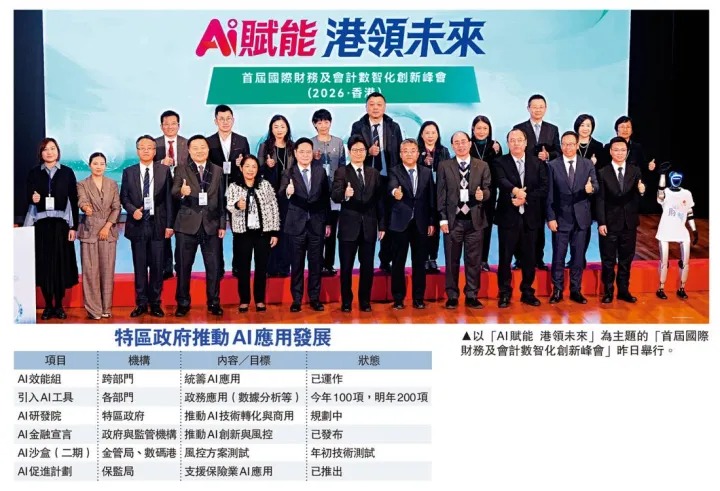
Mr. Joseph Chan Ho-lim, Deputy Secretary for Financial Services and the Treasury, attended and delivered a speech at the opening ceremony. He stated that this year marks the beginning of the 15th Five-Year Plan period. Hong Kong will focus on three major directions to enhance its functions as an international financial centre: strengthening the stock market, and developing green finance, fintech, offshore RMB business, and commodity trading; accelerating the development of an international innovation and technology hub, and cooperating with other cities in the Greater Bay Area to promote advancements in artificial intelligence, biotechnology, and other fields; and consolidating its role as an international trade centre, assisting mainland enterprises in expanding overseas and providing professional service support.
Mr. Chan highlighted that Hong Kong is a leading international financial centre in Asia. In the stock market, Hong Kong ranked first in the world in IPO fundraising last year. It also holds the top position in Asia across various financial segments, including the issuance volume of Asian international bonds, the scale of cross-border wealth management, the size of the hedge fund sector, and insurance density. He emphasized that accounting is an indispensable “infrastructure” of the market economy system and serves as the international common language of business.
Financial Technology Companies Exceed 1,200, Marking a 10% Increase
Regarding financial technology, according to the Global Financial Centres Index, Hong Kong has been ranked first in the world in the fintech category. This fully demonstrates the international community’s recognition of Hong Kong’s financial innovation and institutional strengths. Mr. Chan emphasized that Hong Kong is an ideal base for developing fintech. The city is home to over 1,200 fintech companies, representing a year-on-year increase of approximately 10%. These companies offer a diverse range of services covering cross-border wealth management, AI-powered wealth advisory, asset allocation, and investment management.
Despite recent geopolitical tensions, Mr. Chan believes that in an environment of increased global market instability, Hong Kong’s policy stability, well-developed regulations, and highly transparent regulatory regime have instead become standout advantages, continuously attracting international financial institutions and investors to establish or expand their operations in Hong Kong. He anticipates that as long as Hong Kong’s fundamental strengths remain unchanged and it “focuses on its own development,” he remains optimistic about capital inflows.
Mr. Chan cited a report issued by the Hong Kong Monetary Authority last year, which indicated that 75% of surveyed banks had already adopted AI in their business operations, an increase of about 27% from 2022. To further promote the application and R&D of AI, the SAR Government will establish the “Hong Kong AI Research Institute” to accelerate the pace of AI research, development, and application. He stated that the institute will act as a bridge between scientific research and industry, facilitating the translation of technological achievements into commercial applications.
Mr. Chan noted that the SAR Government maintains an open attitude and adopts a dual-track approach to promote the application of AI in the financial services sector: on one hand, fostering innovative development, and on the other, addressing challenges related to cybersecurity, data privacy, and intellectual property.
He stated that the SAR Government and regulatory bodies are taking proactive steps. For instance, the Generative AI Sandbox launched by the HKMA and Cyberport has entered its second phase, attracting 20 banks and multiple technology partners. It focuses on “using AI to counter AI” for risk management applications, with technical testing expected to commence early this year.
Insurance Authority Launches AI Promotion Programme
Furthermore, the Securities and Futures Commission (SFC) has issued a circular to the industry on the use of generative AI language models, and the Insurance Authority (IA) has also rolled out an “Artificial Intelligence Promotion Programme.” The SAR Government will continue to review guidelines to ensure financial institutions adopt AI responsibly, striking a balance between seizing opportunities and mitigating risks.
This summit was jointly organized by Hong Kong Ta Kung Wen Wei Media Group, alongside universities including The Hong Kong Polytechnic University and Sun Yat-sen University, as well as institutions such as The Hong Kong Chinese Enterprises Association, Yonyou (Hong Kong) Co., Ltd., and Hong Kong Business Accountants Association. The summit was co-organized by THE HKCEA Financial & Accounting Affairs Steering Committee, The Hongkong and Shanghai Banking Corporation Limited, Industrial and Commercial Bank of China (Asia) Limited, Hong Kong Institute of Certified Public Accountants, China Resources Corporate Services (HK) Limited, among others. iFLYTEK provided simultaneous interpretation support for the summit.
Other officiating guests included Mr. Li Xuhong, Deputy Director of the Administrative and Financial Department of the Central Government’s Liaison Office in Hong Kong; Mr. Zheng Yongnan, Vice Chairman and General Manager of Hong Kong Ta Kung Wen Wei Media Group; and Mr. Rock Law, Member of the National Committee of the Chinese People’s Political Consultative Conference and President of the Hong Kong Institute of Certified Public Accountants.
PolyU to Establish Advanced Artificial Intelligence Research Institute
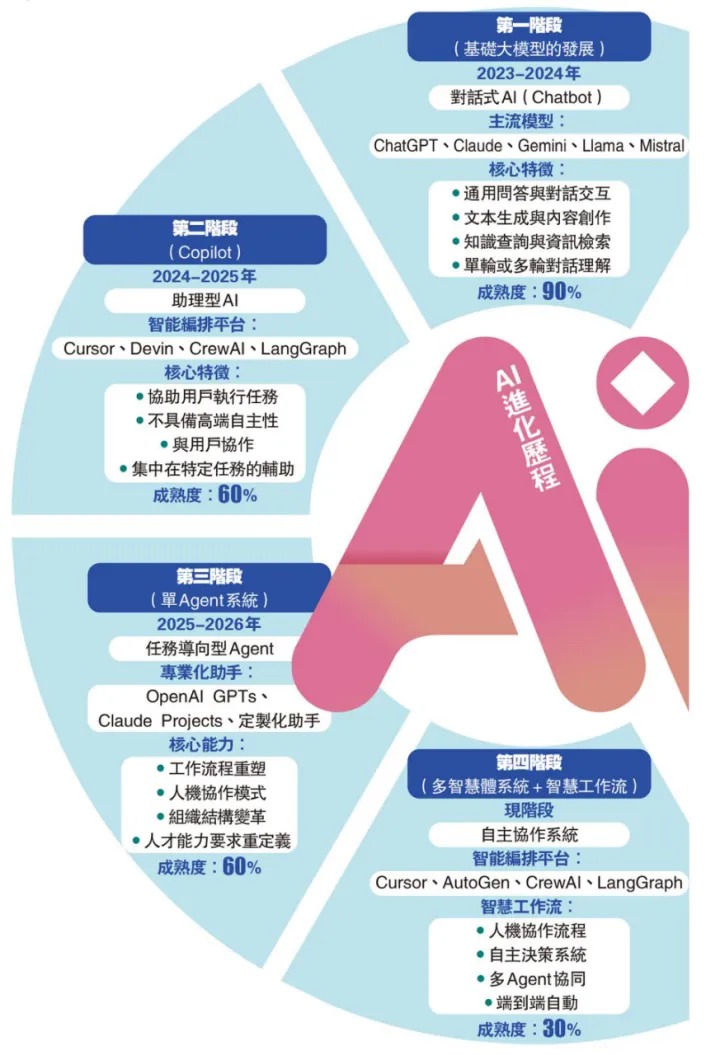
Ta Kung Pao News — Professor Wong Wing-tak, Deputy President and Provost of The Hong Kong Polytechnic University (PolyU), delivered a speech at the “International Innovation Summit on Financial and Accounting Digital Intelligence” yesterday. He pointed out that the adoption rate of generative artificial intelligence (AI) among Hong Kong’s financial institutions has reached 38%, leading the global trend. However, small and medium-sized institutions still face challenges such as difficulties in technology implementation, talent shortages, and cross-border data compliance, which require collaborative efforts from industry, academia, and research sectors to address.
Professor Wong noted that PolyU integrated AI into its undergraduate general education curriculum in September 2022, making it one of the first universities globally to do so. The Faculty of Business and the Faculty of Engineering have jointly launched courses covering AI, blockchain, and financial technology, incorporating content on data security, privacy protection, and cross-border compliance to enhance students’ ethical and regulatory awareness.
In January this year, PolyU established the School of Computing and Mathematical Sciences, and will further launch the PolyU Advanced Artificial Intelligence Research Institute in April to meet the growing demand for AI talent and expertise, as well as to advance cutting-edge research and applications.
In terms of industry-academia-research collaboration, PolyU actively partners with the industry to develop smart finance laboratories, nurturing a new generation of financial professionals. By integrating into the development of the Greater Bay Area and cooperating with institutions such as Sun Yat-sen University, PolyU aims to build an innovation ecosystem characterized by a “Hong Kong platform + Bay Area market + international network”, providing support for the digital transformation of finance and accounting. Professor Wong emphasized that innovation is the core driver of high-quality social development, and Hong Kong, with its robust financial system and top-tier scientific research capabilities, possesses the foundation to become a global hub for innovation in finance and accounting.
“15th Five-Year Plan” to Drive Digitalization of Accounting Industry
Ta Kung Pao News — Mr. Zheng Yongnan, Vice Chairman and General Manager of Hong Kong Ta Kung Wen Wei Media Group, delivered a speech at the “International Innovation Summit on Financial and Accounting Digital Intelligence” yesterday. He noted that this summit was initiated in response to the technological transformation of our times. Currently, emerging technologies such as artificial intelligence, blockchain, and cloud computing are reshaping the ecosystem of the global accounting industry, while the international competitive landscape is evolving at an accelerated pace. As an international financial centre, Hong Kong shoulders the mission of connecting global resources amidst the wave of digitalization and also embraces a valuable opportunity to consolidate its position as a hub for professional services.
Consolidating Hong Kong’s Status as a Professional Services Hub
He stated that the summit serves as a concrete practice in implementing the strategic goals of the national “15th Five-Year Plan”. The Plan’s recommendations explicitly call for advancing the construction of a Digital China, encompassing measures from improving the foundational systems for data as a factor of production and building a nationally integrated data market, to promoting the deep integration of the real economy and the digital economy, implementing innovation and development projects for the Industrial Internet, and accelerating innovation in digital technologies like artificial intelligence through the comprehensive “AI Plus” initiative. This series of deployments not only outlines the blueprint for the nation’s digital development but also charts the course for the digital transformation of the accounting industry.
Mr. Zheng pointed out that accounting, as a crucial link connecting the real economy and the digital economy, has a level of digitalization that directly impacts the efficiency of value conversion for data factors in economic activities. It also influences the effectiveness of implementing the “AI Plus” initiative in the fields of finance and corporate management.
Regarding promoting the integrated development of the Guangdong-Hong Kong-Macao Greater Bay Area, Mr. Zheng emphasized that cooperation in professional accounting services is a core pillar for the area’s financial integration. The summit aims to build an innovation ecosystem characterized by a “Hong Kong platform + Bay Area market + international network”. This seeks to foster a dynamic where Hong Kong’s strengths in professional services and the Bay Area’s vast market space and rich industrial resources empower each other, facilitating deep alignment between international cutting-edge resources and the Bay Area’s financial innovation practices.
Mr. Zheng stated that the media should act as a catalyst to better shape and leverage Hong Kong’s advantages. With a commitment to “serving the national strategy”, it is dedicated to building platforms for financial cooperation in the Greater Bay Area, aiming to harness the power of the media to create a bridging link for Hong Kong as it approaches the “FinTech 3.0 era”.
AI Empowers Finance Professionals to Transform into Strategic Advisors
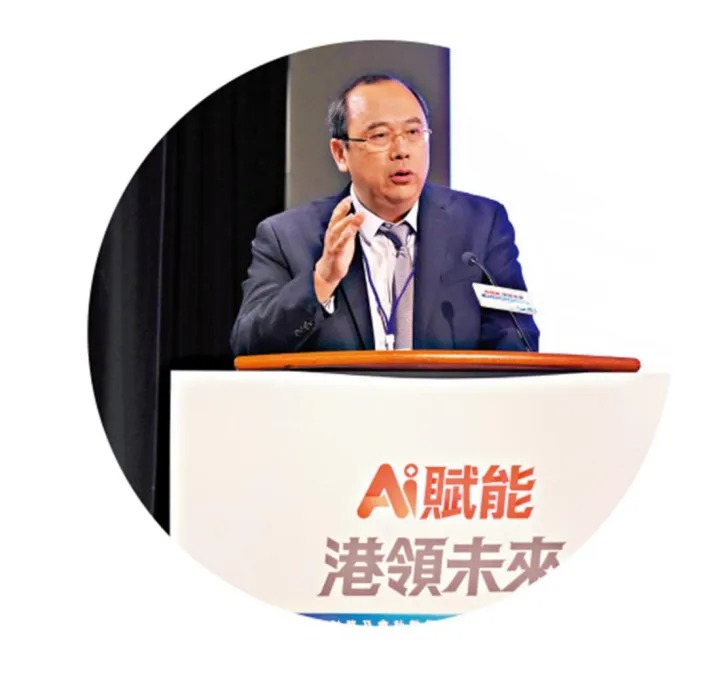
Ta Kung Pao News — Mr. Liu Yagan (inset photo), Chairman and Executive Director of Industrial and Commercial Bank of China (Asia) Limited, delivered a keynote speech yesterday. He pointed out that against the backdrop of rapid advancements in artificial intelligence and big data, the functions of financial accounting are undergoing profound transformation. These roles should evolve from traditional bookkeeping and supervision towards becoming “strategic advisors”, deeply empowering enterprise management and decision-making.
The Core of Digital Transformation Lies in Talent
Looking ahead, Mr. Liu Yagan outlined three directions for AI-driven transformation of finance functions. Firstly, at the strategic level, finance professionals should evolve from process executors to strategic advisors, achieving “profound and astute calculation” to support corporate decision-making. Secondly, at the operational level, value measurement must shift from revealing the past to predicting the future, enhancing the ability for trend insight and forward-looking analysis of data. Thirdly, at the compliance level, financial compliance should progress from post-event management to an intelligent, closed-loop process, strengthening the initiative and accuracy of risk prevention and control.
He emphasized that talent is the core of achieving financial digital transformation. Finance and accounting professionals in the AI era need to possess both business acumen and technological application capabilities, deeply understand industry essentials, and skillfully use intelligent tools to enhance efficiency. Hong Kong, as an international financial centre, holds unique advantages. ICBC (Asia) will leverage the group’s global network to continuously advance the value-creation capacity of financial management, injecting digital momentum into the industry’s high-quality development.
Regarding Hong Kong’s AI development, Mr. Liu proposed several suggestions: First, top leaders across industries must fully recognize the role of AI, as failing to utilize it effectively may weaken a company’s potential competitiveness, thereby strengthening the industry’s willingness to invest in AI. Second, stay grounded and ensure AI is tightly integrated with the specific industry it serves. Third, avoid relying solely on AI for decision-making; instead, reference information from multiple sources to prevent cognitive bias.
AI Agent Applications Boost Enterprise Operational Efficiency
Ms. Fu Jianhua, Vice President of Yonyou Network Technology Co., Ltd., stated at the forum yesterday that generative artificial intelligence (AI) technology is bringing revolutionary transformation to the field of finance and accounting. She pointed out that since the rise of the generative AI wave at the end of 2022, technological development has entered a new stage centered on intelligent agents (Agents) as core tools. These agents are rapidly being implemented in key corporate finance scenarios, fundamentally enhancing efficiency, risk control, and decision-making capabilities.
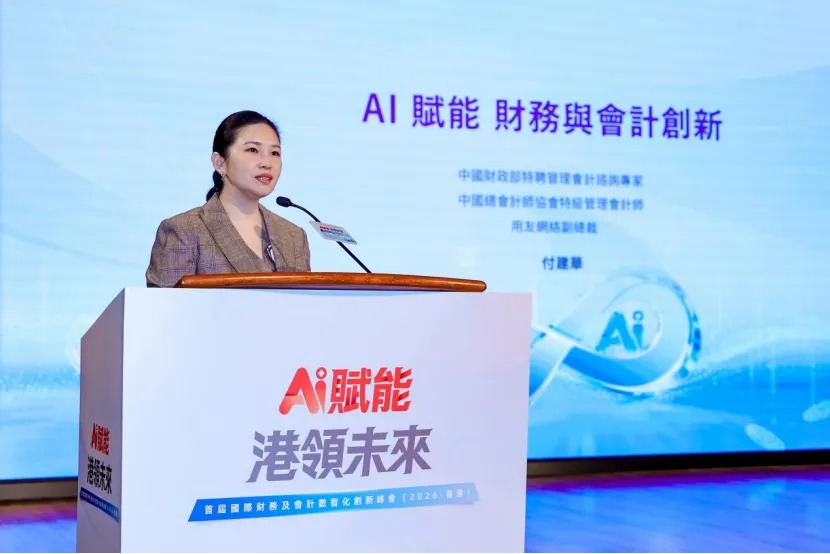
Ms. Fu noted that the capabilities of AI technology, especially general-purpose large models, in areas such as natural language understanding, multimodal recognition, and complex reasoning are evolving at an unprecedented pace. Related tools have progressed from chatbots in 2023, to assistive AI (Copilot) in 2024, and then evolved into task-oriented intelligent agents (Agents) in 2025. Today, they have advanced to the stage of agents capable of autonomously handling tasks. In current enterprise-level applications, intelligent agents have become key carriers. They can flexibly leverage the capabilities of large models and integrate them with processes and expertise within professional management software, thereby deeply embedding themselves into the core of business workflows.
Ms. Fu also highlighted the four most prominent types of intelligent agent application scenarios in corporate finance since 2025, which include data insight, intelligent auditing, intelligent contracts, and comprehensive financial Q&A. She revealed that Yonyou’s new-generation management digitalization platform has integrated over 50 intelligent agents, which are already serving the digital applications of numerous enterprises.
AI Integration Becomes An Urgent Need for the Professional Services Industry
Ms. Fu Jianhua emphasized that AI-enabled innovation in finance has moved beyond mere technological experimentation and is now tangibly addressing the fundamental need for enterprises to enhance their core competitiveness. She expressed the hope that these leading technologies and tools could be introduced to Hong Kong in 2026, aiding local enterprises in achieving innovative development in the fields of accounting and finance.
Regarding how Hong Kong can seize the opportunities presented by AI development and strengthen its role, Ms. Fu believes the professional services sector in Hong Kong needs to accelerate the integration of AI technology to maintain its competitive edge. She put forward four key recommendations:
First, enterprises should promote the deep integration of AI technology with management, operations, products, and business models. Second, Hong Kong can develop more application guidelines and industry standards for intelligent accounting and intelligent finance by leveraging AI technology. Third, professional service institutions must strengthen their own AI capabilities to empower various local industries. Fourth, the local education system should focus on cultivating interdisciplinary accounting and finance talent equipped with a digital mindset.